
Obsolete Marine Cylinder Head Replaced in Two Weeks with Digital Casting
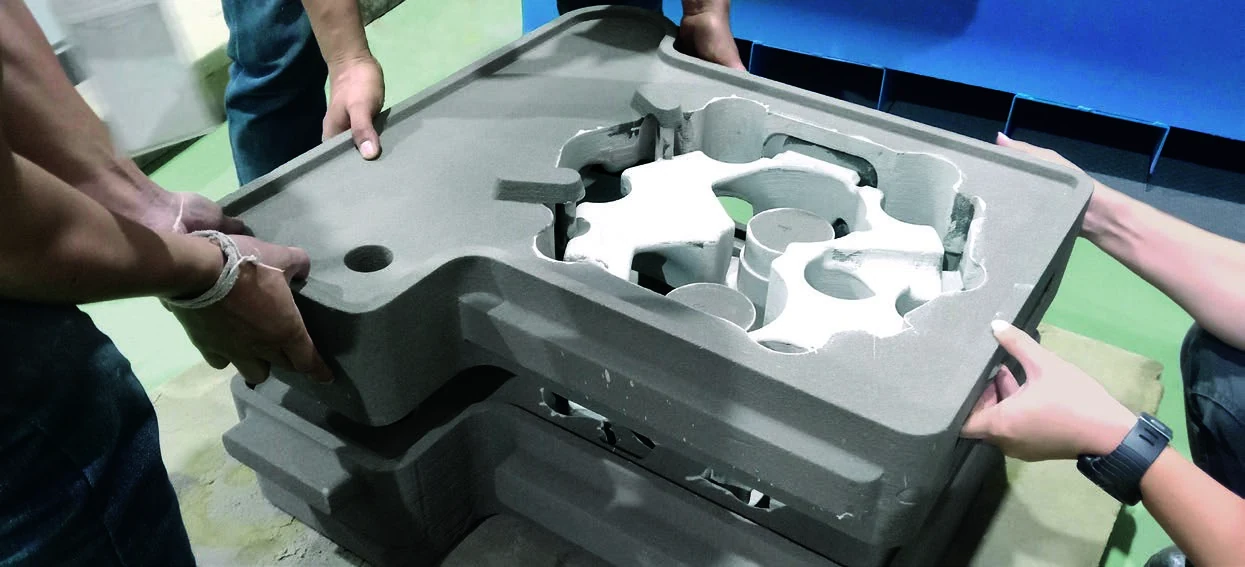
A cracked cylinder head from a marine diesel engine was no longer produced by the OEM and no casting pattern existed. Speed 3D Mold recovered the geometry by 3D scanning and produced the replacement casting from a 3D-printed sand mold package — with delivery reported in two weeks.
PROJECT OVERVIEW
Project Specification
Facts drawn from the ExOne case study documenting this Speed 3D Mold project in Thailand.
- Component
- Marine Diesel Engine Cylinder Head
- Cast Material
- ASTM A48 Class 30 Gray Cast Iron
- Part Weight
- Nearly 100 kg
- Application
- Replacement Part for a Cargo Boat Engine
- 3D Printer
- ExOne S-Max
- Mold Material
- Silica Sand with Furan Binder
- Location
- Samutsakorn, Thailand
- Source
- ExOne Case Study (2022)
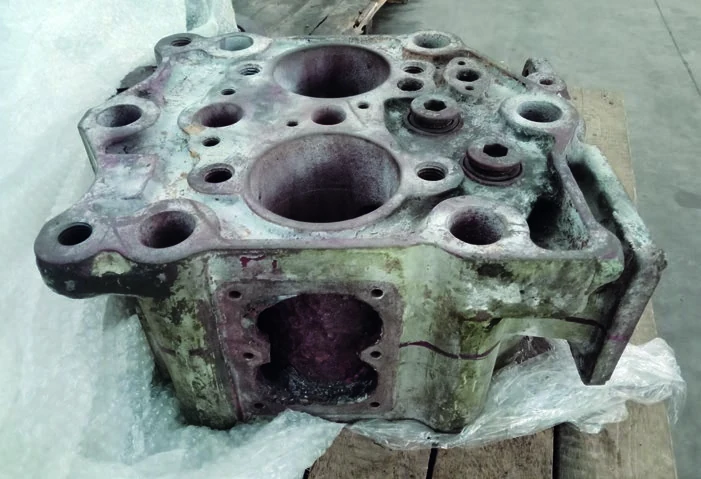
A Cracked Legacy Cylinder Head with No Tooling Available
According to the ExOne case study, Hi-Tech Marine Engineering — a shipyard in Thailand — was faced with a cylinder head cracked by the stress of overheating. The cargo boat needed a fast repair to return to service, yet the broken component was nearly a decade old and no longer in production from the OEM supplier.
Cylinder heads sit on top of the liner flange and support fuel injectors and inlet and exhaust valves, so they are exposed to extremely high temperatures and pressures. Building an entirely new pattern and core box set to produce the replacement casting was reported to carry a lead time of over 10 months and a very high investment cost, while an overseas order would take at least eight weeks.
“Time to delivery is critical in our business – we cannot wait for parts because we are in constant operation, so we need fast turnarounds on-budget.”
Reverse Engineering the Original Component
Speed 3D Mold's engineering department supported Hi-Tech Marine with reverse engineering services. The team 3D scanned the original part to create a digital CAD file that could then be used to develop a 3D-printed mold and core package for casting a new component. With binder jet 3D printing no hard tooling is needed — the mold and cores are built layer by layer in sand directly from the CAD file.
With digital casting, Speed 3D Mold was also able to make fast iterations to the part to ensure the optimal quality of the replacement cylinder head. The part contained many complex features, including large thickness differences and small cooling channels, yet these could be modified within the digital process. The design freedom of additive manufacturing also allowed the cooling channel design to be updated and the rigging system to be placed freely within the mold, without the traditional limitations of casting design.
A 19-Piece Mold Package Printed in 10 Hours
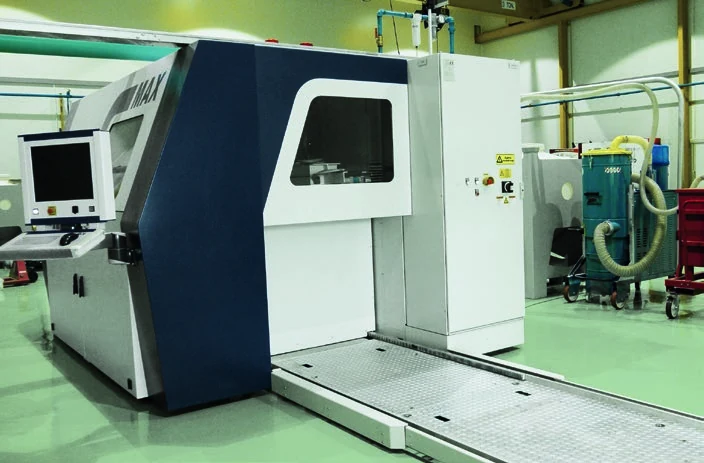
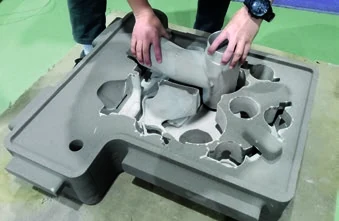
The complex 725 × 630 × 572 mm mold package contained 19 pieces, 3D printed on the ExOne S-Max binder jetting system in silica sand with a furan binder. According to the case study, printing took just 10 hours with no unexpected errors in dimension or shape.
- Mold Package Size
- 725 × 630 × 572 mm
- Mold and Core Pieces
- 19 Pieces
- Reported Print Time
- 10 Hours
- Process
- Binder Jetting (S-Max)
- Reported Delivery
- Two Weeks
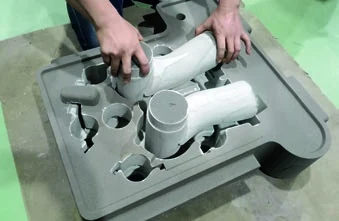
Data source: ExOne case study (2022).
Reported Lead Times by Route
| Route | Reported Lead Time | Scope |
|---|---|---|
| Traditional replacement with new tooling | Over 10 months | Lead time reported for a conventional pattern and core box set |
| Overseas order of a replacement part | At least 8 weeks | Reported, with increased shipping costs |
| Customer requirement | Within 4 weeks | Timeframe stated by Hi-Tech Marine Engineering |
| Digital casting route delivered by Speed 3D Mold | Two weeks | Reported delivery of the finished cylinder head casting |
All timelines above are as reported in the ExOne case study for this specific project. Lead times for other components depend on geometry, material, quantity and machining scope.
A Nearly 100 kg Gray Iron Cylinder Head Delivered in Two Weeks
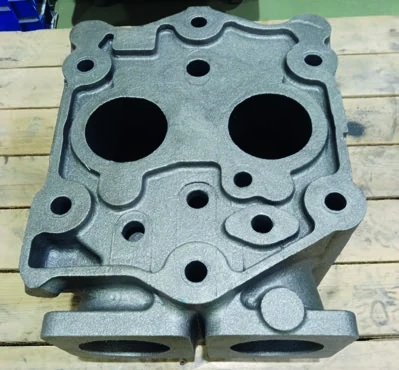
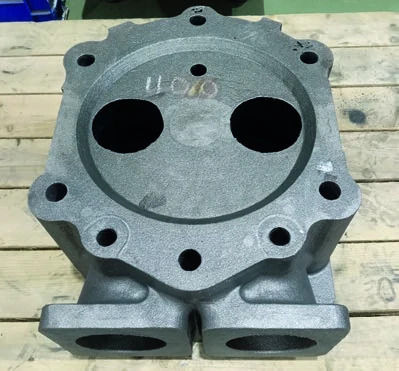
A traditional replacement casting carried a 10-month lead time for tooling — this replacement was produced with sand 3D printing and delivered in weeks.
The nearly 100 kg replacement cylinder head was cast in ASTM A48 Class 30 gray iron and the final component was delivered to Hi-Tech Marine in just two weeks. The large capital investment required to make tooling for a single replacement part would not have been economical; printing the mold package directly is reported to save up to 40% compared to conventional production.
- No hard tooling was required — the mold and cores were printed directly from the CAD file
- The original geometry was recovered by 3D scanning because no casting pattern existed
- Design freedom allowed the cooling channel design and rigging placement to be updated
- Fast digital iterations supported the large thickness differences and small cooling channels
- The 19-piece mold package printed in 10 hours with no reported dimensional or shape errors
- ExOne reports the printed mold package can save up to 40% compared to conventional production
“For our customers in the maritime industry where there are many legacy parts that need replacement, speed is the most important factor for timely maintenance to keep systems in service.”
Documented by ExOne
This project was documented by ExOne in the 2022 case study “Obsolete Replacement Part Delivered in Two Weeks with Digital Casting”, describing how Speed 3D Mold used binder jetting to provide a replacement casting for a legacy diesel engine cylinder head without tooling.
Source: ExOne case study, © Desktop Metal 2022. All facts, figures and quotations on this page are as reported in that document. Images © Desktop Metal / ExOne, used for reference to a project carried out by Speed 3D Mold.
External Industry Coverage
Featured by 3DPrint.com
This marine cylinder-head replacement project was also featured in a sponsored industry article published by 3DPrint.com and authored by Team ExOne on 9 August 2022.
Read the article on 3DPrint.com(opens in a new tab)External sponsored article by Team ExOne. The link opens on 3DPrint.com.
Need an Obsolete Part Replaced?
Send us photos, a drawing or the existing component. Our engineering team can review the geometry, material and manufacturing route for a patternless replacement casting.