SUSTAINABILITY
Our Sustainability Direction
Speed3D Mold’s sustainability initiatives are currently at the planning stage. Our direction is to explore how engineering decisions and future evaluation of resource use can inform improvements in casting production.
This page separates existing engineering activities from planned environmental initiatives; it does not report verified environmental reductions.

Engineering Decisions Relevant to Resource Use
The following engineering activities provide practical context for our sustainability direction. Their environmental effects depend on the project and are not quantified here.
Assess Component-Level Replacement
Where it is technically suitable, an engineering review can consider replacing an individual worn or damaged component instead of assuming that a complete assembly has to be replaced. Whether this is possible depends on the component condition, available information and the service requirement.
Replacement CastingReview Before Production
Geometry review and casting simulation are used to examine filling, solidification and rigging behaviour before a mold is produced, so that manufacturing risks can be discussed while the design can still be adjusted.
Casting SimulationSelect the Manufacturing Route
Existing tooling, conventional patterns, 3D-printed molds and cores, or a combination of these can be considered according to component geometry, required quantity and production requirements. The suitable route differs from project to project.
Compare Manufacturing RoutesEngineering in Practice
Steel Pump Bowl Replacement
- Documented requirement
- Replacement steel pump bowl components were required for an urgent pump repair, with a three-week delivery.
- Engineering approach
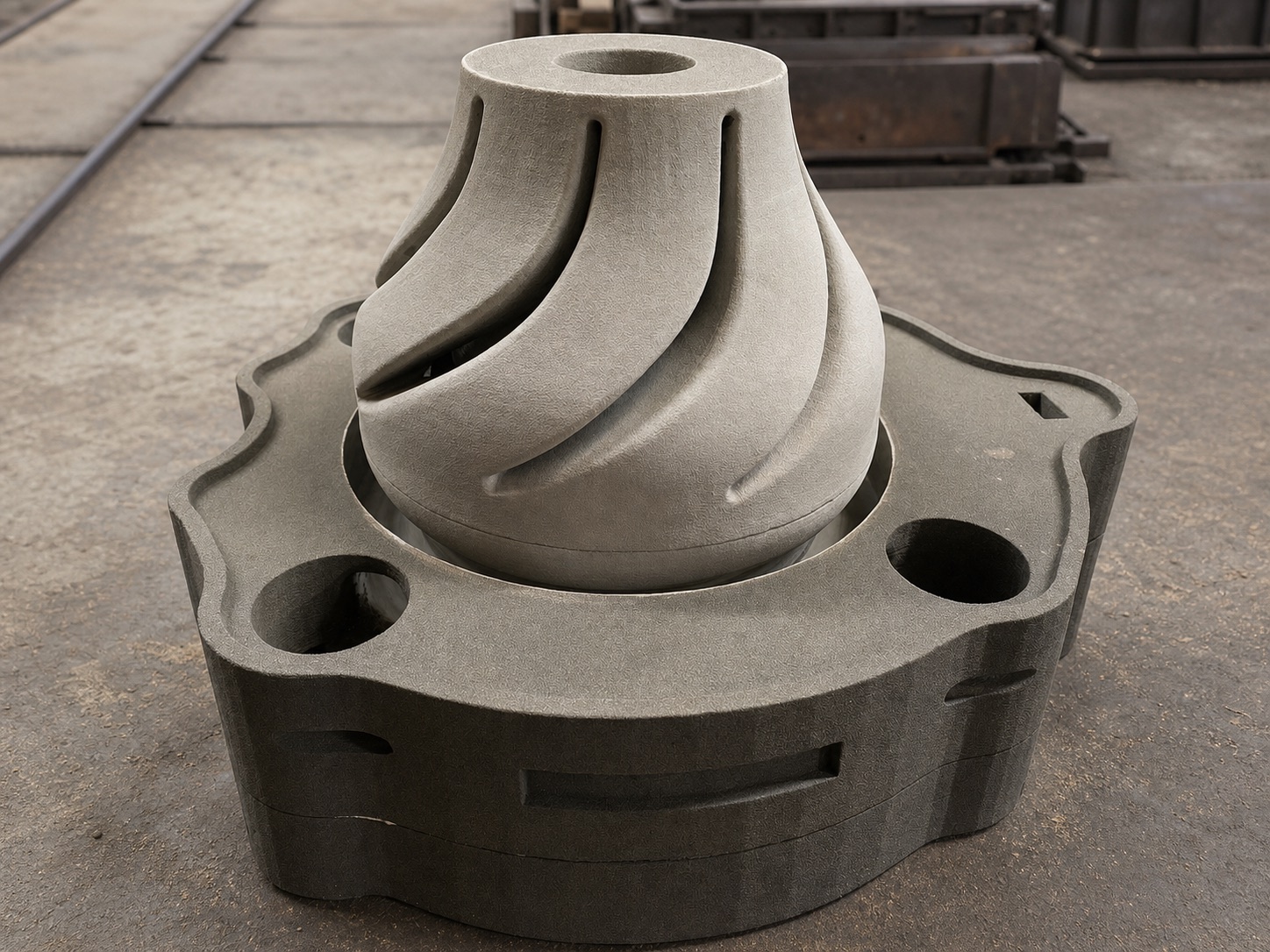
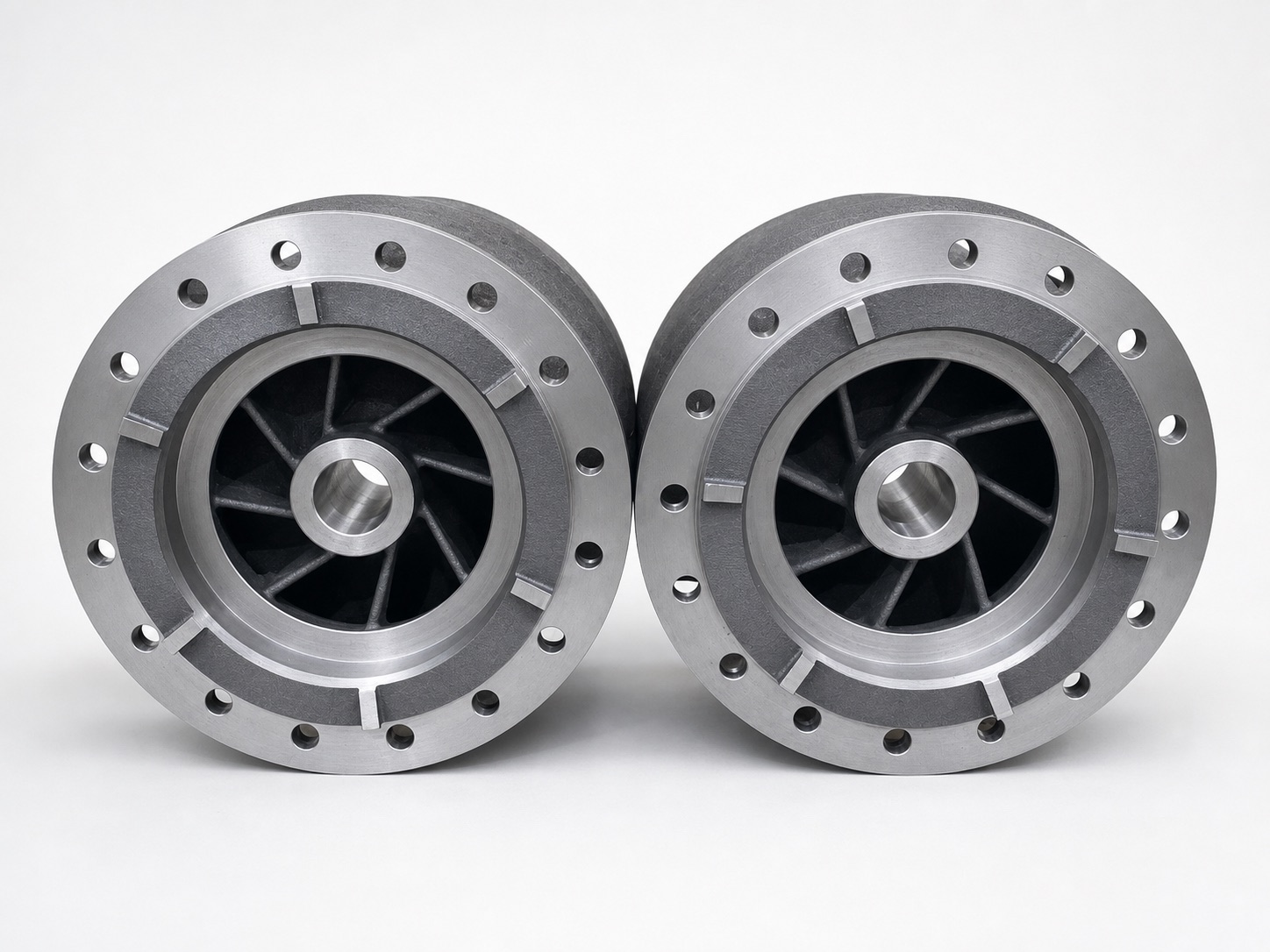
- CAD preparation, rigging design and casting simulation were completed before a 3D-printed sand mold and core package was produced, followed by steel casting and final machining.
- Produced
- A printed sand mold and core package, and the finished machined steel pump bowls.
This example illustrates engineering and manufacturing work. It is not a quantified environmental-impact assessment.
Planning the Next Steps
We plan to explore a more systematic approach to evaluating energy use, material consumption and production waste. The scope, methods and implementation schedule have not been specified on this page. These plans should not be interpreted as an operational monitoring programme or verified environmental performance.
Define the scope
Identify which processes and resource inputs would be included in an assessment.
Evaluate data requirements
Consider the records needed to understand energy use, material inputs and production losses.
Establish a basis for comparison
Define an appropriate reference and assessment method before making claims about improvement.
Any future environmental-performance claims should be supported by a defined assessment scope and relevant evidence.
Discuss Your Replacement Component
Share the component condition, available drawings or scan data, required quantity and intended service. Our engineering team can review the available information and discuss a suitable manufacturing approach.