Steel Pump Bowl Delivered in 3 Weeks
An integrated digital-to-casting workflow for a critical replacement component—from CAD preparation to final machining.
- Component
- Steel Pump Bowl
- Workflow
- CAD to Machining
- Lead Time
- 3 Weeks
The three-week lead time is the result of this specific project. Lead time for new projects depends on component geometry, material, size, quantity, machining, inspection requirements, and available production capacity.
When a Critical Pump Component Cannot Wait
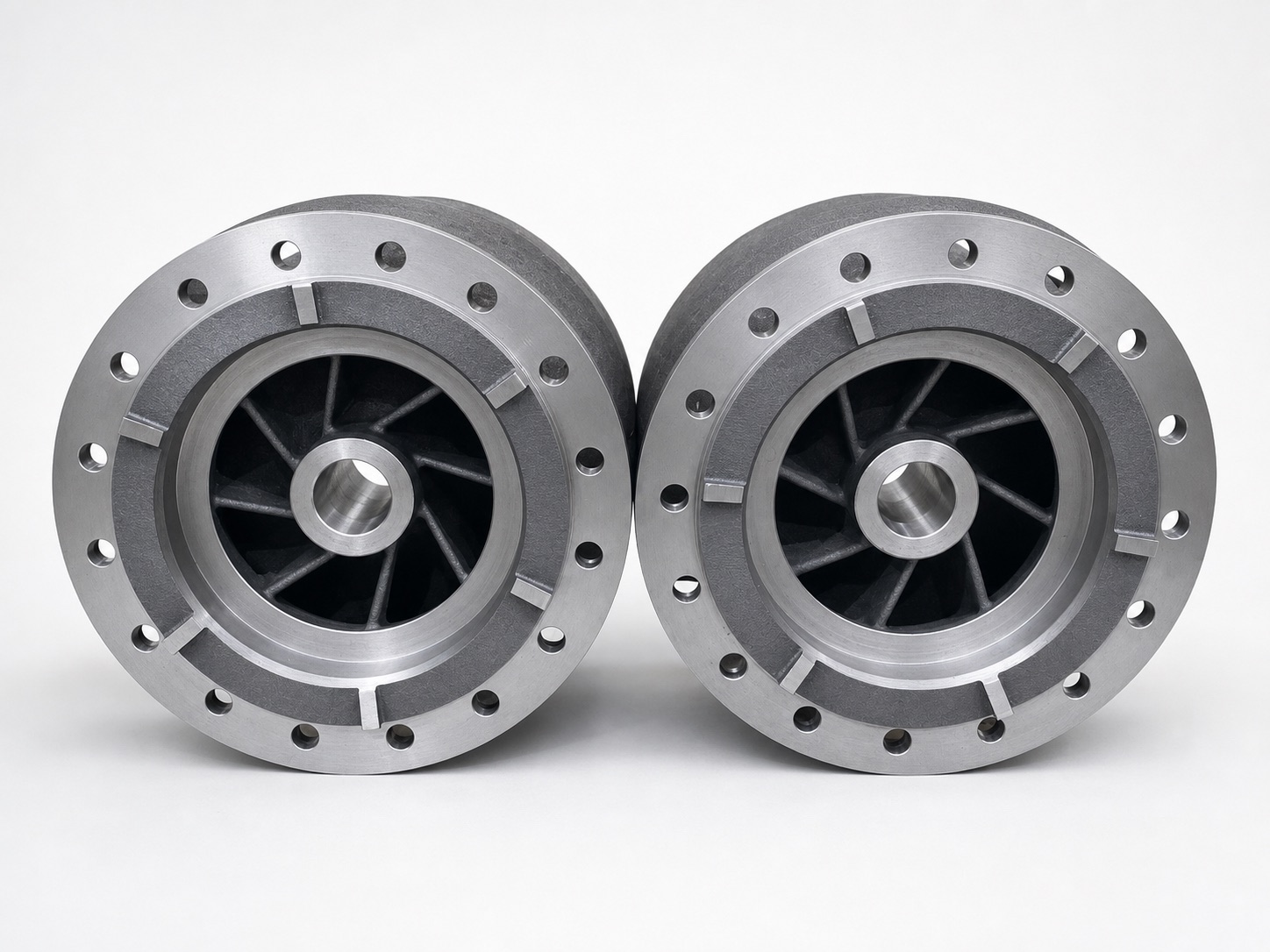
A replacement steel pump bowl was required under a compressed production schedule. Its complex internal geometry demanded coordinated engineering across CAD preparation, rigging design, casting simulation, mold production, steel casting, and machining.
The project was completed through one connected workflow within three weeks.
WORKFLOW OVERVIEW
Six Coordinated Stages, One Connected Workflow
One coordinated workflow reduced handoffs between engineering, mold production, casting, and machining.
- 01
CAD Preparation
- 02
Rigging Design
- 03
Casting Simulation
- 04
3D-Printed Sand Mold
- 05
Steel Casting
- 06
Final Machining
Engineering the Replacement Geometry
The pump bowl geometry was prepared as a production-ready 3D model. Internal flow passages, wall sections, flanges, and machining surfaces were reviewed before casting development began.
Designing the Complete Casting System
The gating, feeding, riser, and venting arrangement was developed around the pump bowl’s complex geometry. The rigging design connected the component model directly to the planned casting process.
Validating the Process Before Pouring
Casting simulation was used to review filling and solidification behavior before mold production. The simulation results supported adjustments to the rigging and feeding strategy before committing to the steel pour.
Complex Mold Geometry Without Conventional Pattern Making
The sand mold and cores were produced directly from digital data. This enabled the complex internal passages of the pump bowl to move rapidly from engineering into mold assembly.
From Digital Design to Physical Steel Casting
After mold assembly and pouring, the casting was cleaned and prepared for downstream machining. The as-cast component shows the internal geometry formed directly by the printed sand mold and cores.
Machined and Prepared for Final Verification
Critical flange faces, bore surfaces, and mounting holes were machined to the required component dimensions. The completed pump bowls were prepared for final inspection and delivery.
- Integrated engineering and production workflow
- Complex geometry produced with 3D-printed sand molds
- Completed steel pump bowl replacement components
The project demonstrates how digital engineering, casting simulation, 3D sand printing, steel casting, and machining can operate as one coordinated emergency replacement workflow. Three weeks is the result of this individual project and is not a guaranteed lead time for every future project.
Is a Critical Component Putting Your Operation at Risk?
Send us the available drawing, CAD data, or component information. Our team can review the geometry, manufacturing route, and feasible production schedule.