
Double-Suction Impeller Casting with 3D-Printed Sand Molds
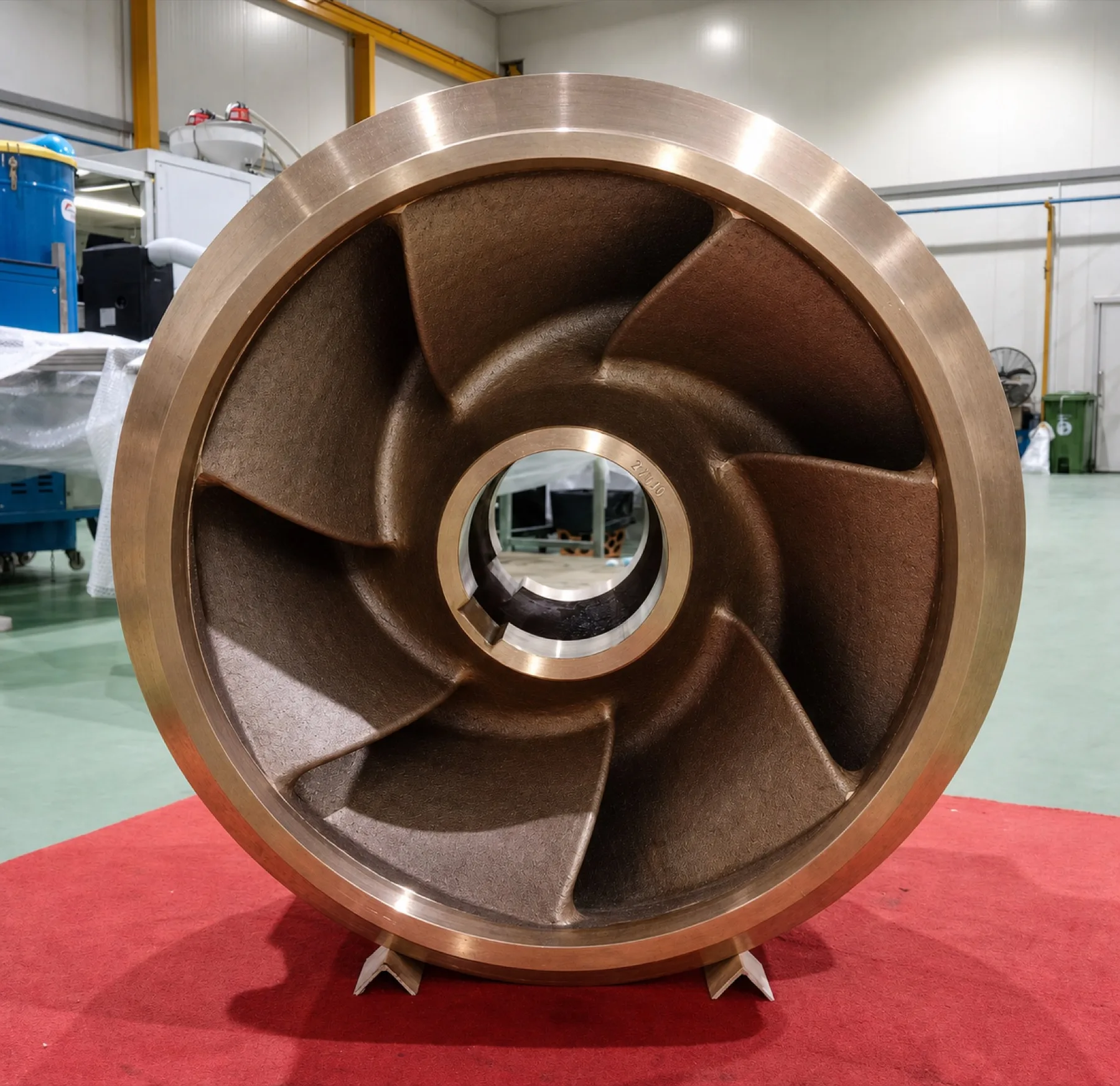
A replacement project for four large double-suction impellers combined digital casting design, casting simulation and binder-jet sand mold production to avoid the extended lead time associated with conventional wooden patternmaking.
PROJECT OVERVIEW
Project Specification
Verified facts drawn from the ExOne case study documenting this Speed 3D Mold project in Thailand.
- Component
- Double-Suction Impeller
- Material
- Lead-Tin Bronze
- Quantity
- Four Castings
- Diameter
- 620 mm
- Part Weight
- 250 kg Each
- Manufacturing Route
- Casting Simulation and 3D-Printed Sand Molds
- Customer Requirement
- Replacement Within Six Weeks
- Source
- ExOne Case Study
Replacing Four Complex Impellers Within a Six-Week Requirement
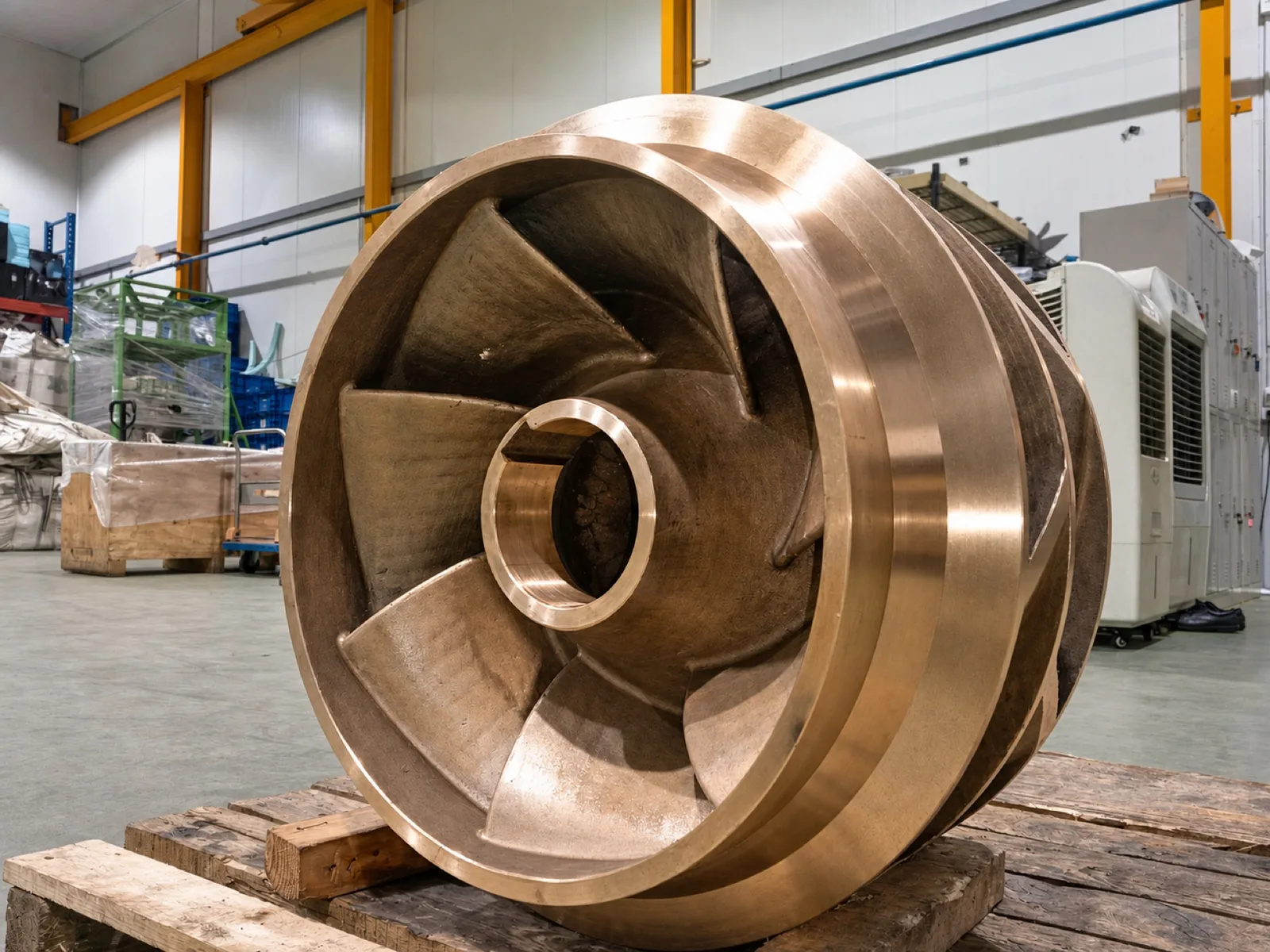
The project involved replacing four worn double-suction impellers for a Thailand-based maintenance and engineering service provider. According to the ExOne case study, conventional wooden patternmaking was estimated to require approximately 15 weeks, exceeding the six-week requirement. The complex internal geometry also made conventional core production and control of core positioning particularly challenging.
Digital Casting Design and Simulation
Speed 3D Mold prepared the casting design for the lead-tin bronze impellers and developed the mold-and-core package around the complex double-suction geometry. Casting simulation was incorporated into the rigging-development workflow before the sand molds and cores were produced.
Four Mold-and-Core Packages Produced in Seven Days
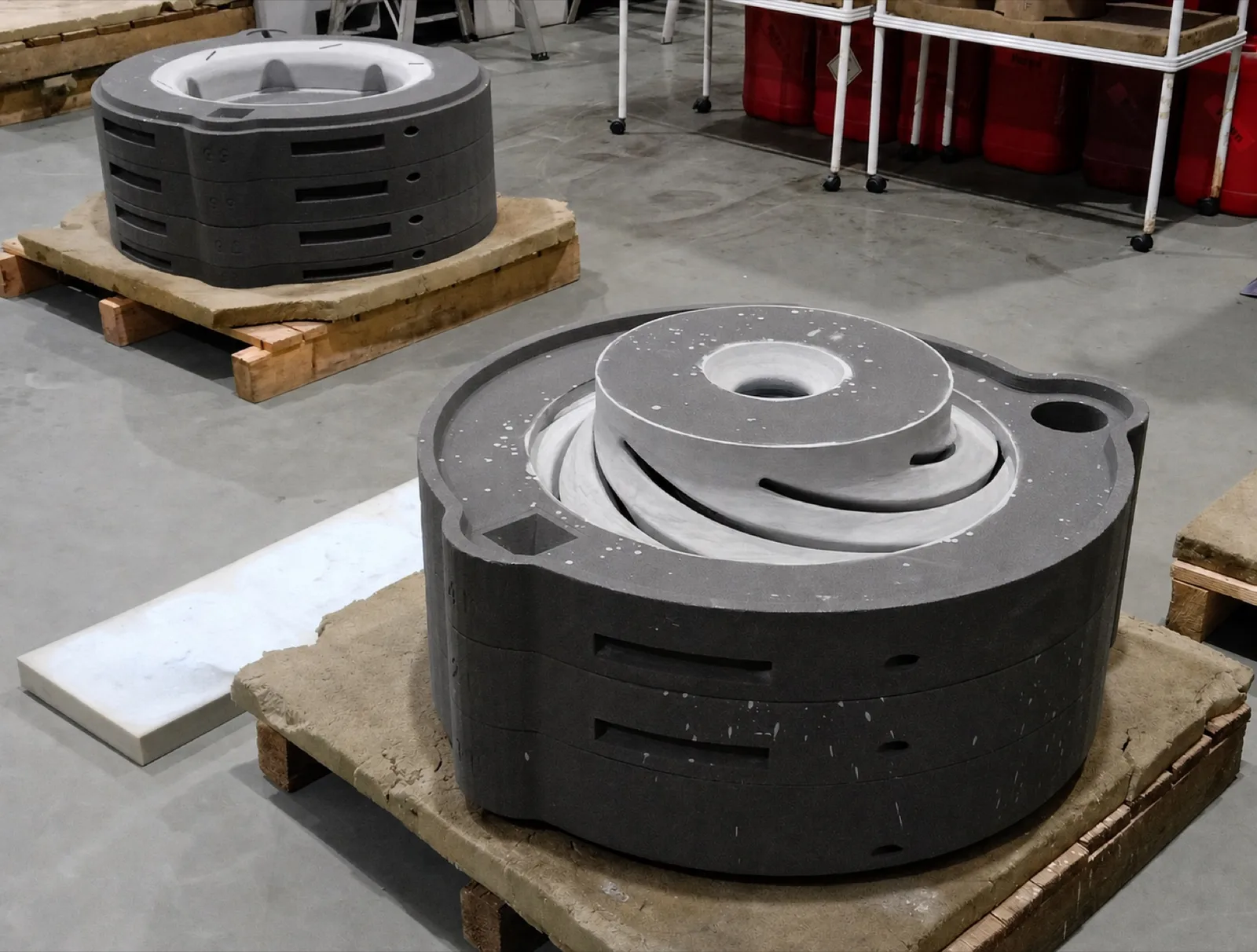
The four mold-and-core packages were produced from silica sand with a furan binder using an ExOne S-Max system. According to the original case study, all four packages were arranged within a single job box and produced in seven days.
- Mold Package
- 900 mm Diameter × 700 mm Height
- Print Volume
- 650 Litres
- Material
- Silica Sand with Furan Binder
- Production
- Four Mold-and-Core Packages
- Reported Printing Timeline
- Seven Days
Data source: ExOne case study.
Reported Timelines by Stage
| Route | Reported Timeline | Scope |
|---|---|---|
| Conventional wooden pattern | 15 weeks | Estimated conventional casting route stated by ExOne |
| Additive mold production | 7 days | Four mold-and-core packages |
| Casting delivery | 7 days | Separately reported by ExOne |
| Machining | Further 7 days | Reported subsequent machining period |
The seven-day mold-production period should not be interpreted as confirmation that every stage of the fully machined project was completed within seven days.
Why the Digital Route Mattered
- Avoided the conventional wooden-pattern route for this project
- Supported production of complex double-suction cores
- Allowed the mold-and-core packages to be generated from digital manufacturing data
- Compressed mold-and-core production into the reported seven-day period
- Supported the customer’s urgent replacement requirement
This project demonstrates how casting simulation and binder-jet sand mold production can support urgent replacement work when conventional patternmaking cannot meet the required timeline. It also provides an externally documented example of Speed 3D Mold applying digital manufacturing to a large and complex bronze impeller casting.
Featured by ExOne
This double-suction impeller project was documented by ExOne as an example of using binder jet 3D printing to produce sand mold-and-core packages on a compressed manufacturing timeline.
View the Original ExOne Case StudyNeed to Replace a Complex or Obsolete Impeller?
Share your drawing, 3D model or existing component with our engineering team. We can review the geometry, material requirements and appropriate manufacturing route for replacement production.