ISO 9001:2015 certification mark

ISO 9001:2015 Certified by SGS

Industry Technical Publication · 2019

Production of Aluminium Bronze Propellers Using 3D Sand Printed Moulds

Nattinee Valun-araya, Ongkarn Chantarasukkasem and John Pearce

Metal Casting Technologies, 2nd Quarter 2019, pp. 18–23

Back to Research & Publications
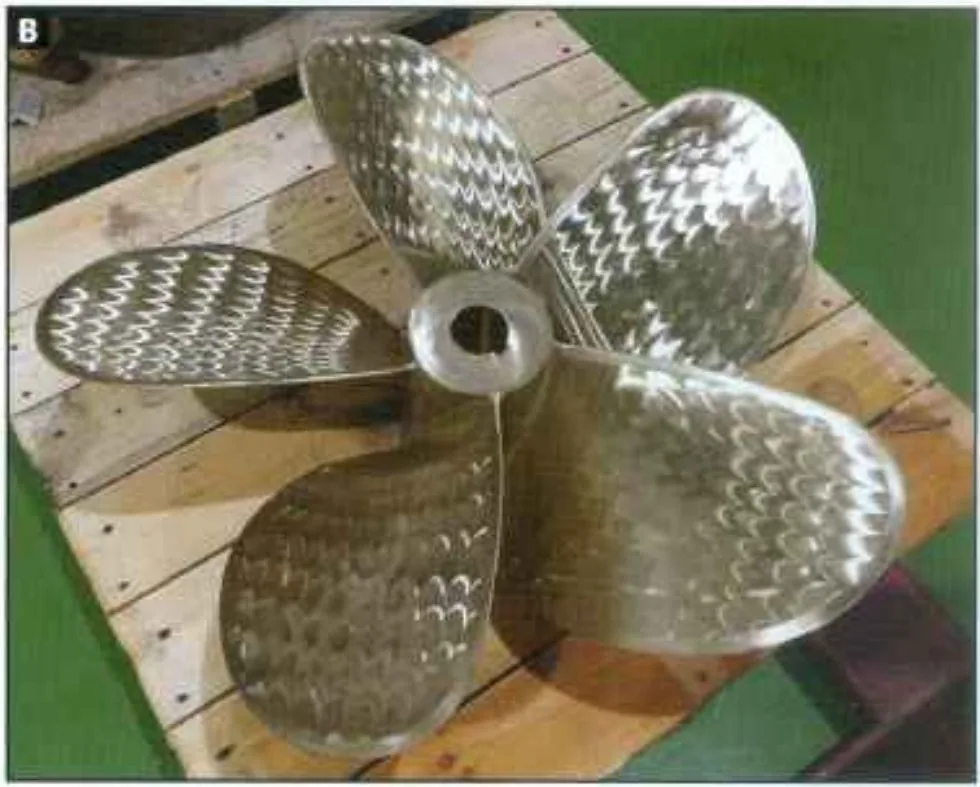
Finish machined 1,200 mm diameter nickel aluminium bronze ship propeller
Finish machined 1,200 mm diameter propeller. Figure from Metal Casting Technologies (2019).

Overview

The article describes the production of nickel aluminium bronze ship propellers of 800, 1,000 and 1,200 mm diameter using binder-jet 3D sand printed moulds. Because the mould is built directly from digital data, no pattern or core box is required, which supports both replacement casting and design modification of marine components.

According to the published technical article, the aluminium bronze propellers produced using 3D sand-printed moulds were intended for patrol vessels operated by the Royal Thai Navy. Where CAD data is not supplied, worn propellers are 3D scanned and re-modelled through reverse engineering to obtain a printable mould geometry.

Casting layout, gating and feeding were prepared with a casting simulation program before printing. Moulds were poured at Chaophaya Foundry, a copper-alloy casting producer supplying the marine, pumping and gear industries since 1985.

Engineering Challenge

Naval vessels and local civilian craft such as ferries have to periodically replace propellers that have been damaged in service and cannot be repaired. Producing the replacement locally avoids import lead time and cost, but a conventional pattern route for a propeller was reported to take around two to three months.

Feeding is the second constraint. Spherical feeders offer the maximum volume to surface area ratio and therefore better feeding efficiency, but they are not easy to incorporate into conventionally moulded sand systems. Printed moulds remove that limitation and also reduce mould height, saving printing time and mould material.

Propellers on fast patrol boats are susceptible to cavitation damage. A cast propeller must therefore be free from sub-surface porosity or defects that could weaken its surfaces, so metal cleanliness, methoding and mould preparation all have to be correct.

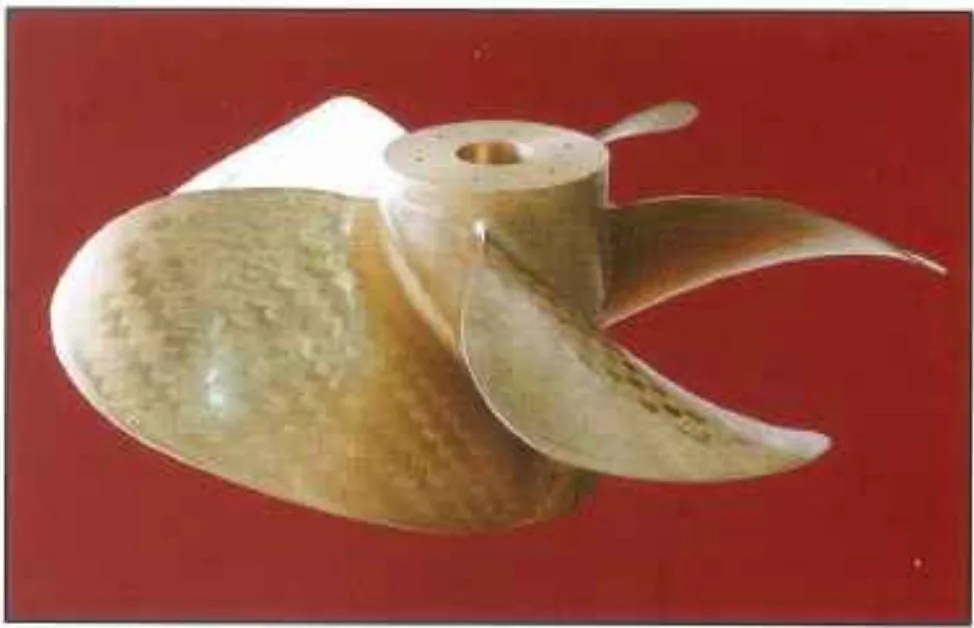
800 mm diameter aluminium bronze propeller in the as-cast condition with a spherical feeder attached
An 800 mm diameter propeller produced using a spherical feeder, as cast.

Production Workflow Described in the 2019 Publication

Workflow as reported for the propellers described in this article. Not every marine project uses every step.

  1. 01
    Propeller GeometryThe publication reports that the Royal Thai Navy creates its own CAD profile for each replacement propeller. Worn propellers from ferries and other non-navy vessels often have to be 3D scanned and re-modelled to obtain a suitable CAD file.
  2. 02
    Casting & Moulding DesignA SolidCast simulation program is used at Speed 3D Mold to design the casting layout, including the gating and feeding system, before mould printing.
  3. 03
    Spherical Feeder LayoutCylindrical feeding heads are replaced by spherical feeders, which are difficult to form in conventional sand moulds.
  4. 04
    3D Sand PrintingThe mould is printed on S-Max binder jetting equipment as a set of separate parts that must fit together precisely.
  5. 05
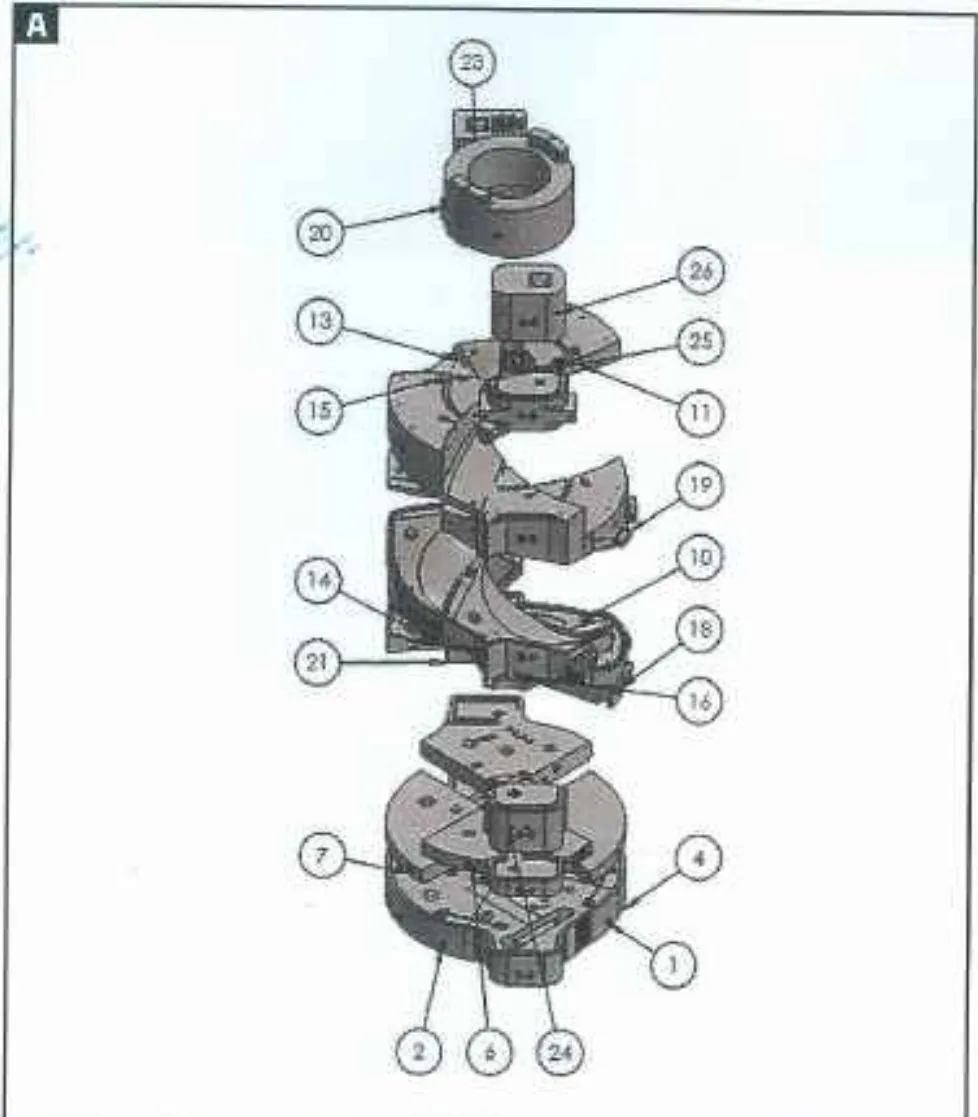
    Mould AssemblyPrinted parts are cleaned and assembled into the complete mould package; for the 1,200 mm propeller the assembly consisted of 26 printed parts.
  6. 06
    Melting & PouringMoulds are poured at Chaophaya Foundry with C95800 nickel aluminium bronze melted in a gas-fired furnace, treated with flux and degassing additions.
  7. 07
    Cooling & RemovalEach cast mould is left to cool for one day before the casting is removed.
  8. 08
    Machining & BalancingThe propeller is finish machined and balanced; nearly half of the total production time is consumed by this stage.
Exploded view of the individual 3D printed parts making up the mould assembly for a 1,200 mm propeller
Exploded view of the printed parts in the 1,200 mm propeller mould assembly.
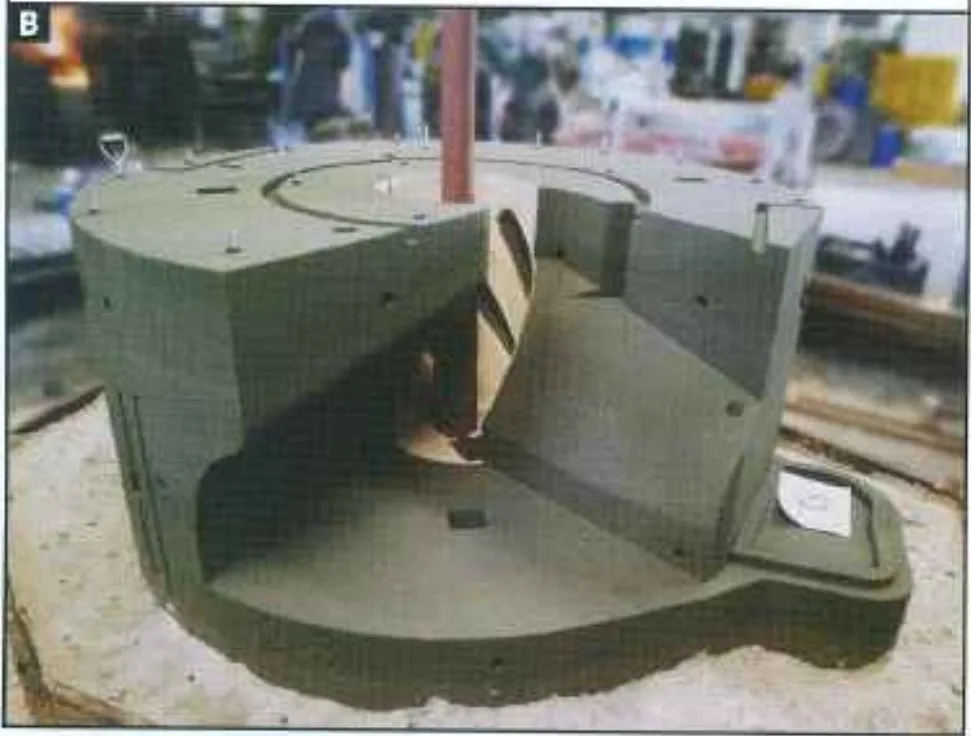
Partly assembled 3D printed sand mould for a 1,200 mm diameter propeller
Partly assembled mould for the 1,200 mm diameter propeller.

Printing and Melting Data

Printing equipment
S-Max binder jetting system, build volume 1,800 × 1,000 mm with 700 mm depth
Layer thickness
280–500 µm, build speed 60–85 L/h
Sand & binder
Silica sand of 260 µm average grain size, pre-mixed with under 0.2% sulphonic acid catalyst, printed with 1.5–2.0% furan binder
Printed sand strength
Typical cold bending strength of 140–190 N/cm² in printed test pieces
Alloy
C95800 nickel aluminium bronze, nominally Cu–9% Al–4.5% Ni–4% Fe–1% Mn
Charge make-up
70% ingot and 30% controlled returns, melted in a gas-fired furnace

Propellers Documented in the Article

800 mm diameter propeller with spherical feeder

This casting illustrates the replacement of a cylindrical feeding head by a spherical feeder printed directly into the mould. The reported casting yield was 55%.

Total production time via 3D sand printing was around 21 days, compared with the two to three months reported for a conventional pattern route. Nearly half of that time is consumed by machining and balancing.

800 mm diameter aluminium bronze propeller after machining
The same 800 mm propeller after machining.

1,200 mm diameter naval propellers

The complete mould was printed as 26 separate parts, with a total printing time of 7 days. The finish machined propeller had a final weight of 627 kg.

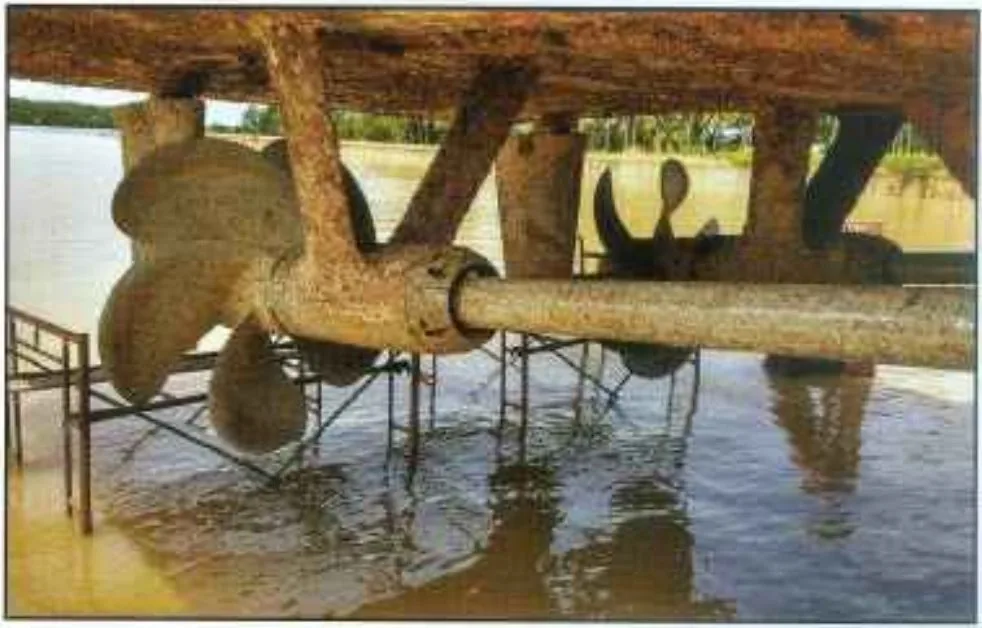
According to the published technical article, propellers produced in this way had been in service for over three years without problems in service performance. A routine two-year dry inspection of twin 1,200 mm propellers on a 38.7 m patrol vessel showed no evidence of cavitation or other damage.

Twin 1,200 mm aluminium bronze propellers on a navy patrol vessel during routine dry inspection
Twin 1,200 mm propellers after two years in service, during routine dry inspection.

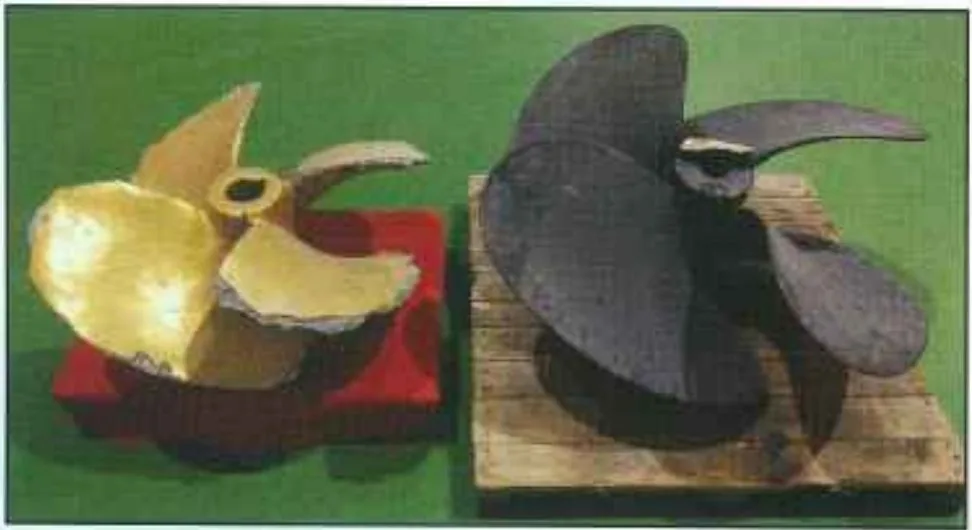
1,000 mm diameter replacement with CFD re-design

A worn 1,000 mm propeller with severe blade tip damage was replaced by a cast propeller produced from a printed mould. The customer wanted to increase vessel speed from 15 to 20 knots.

Re-design supported by computational fluid dynamics analysis predicted a potential speed of 21 knots. At the time of publication the propeller was due to enter service.

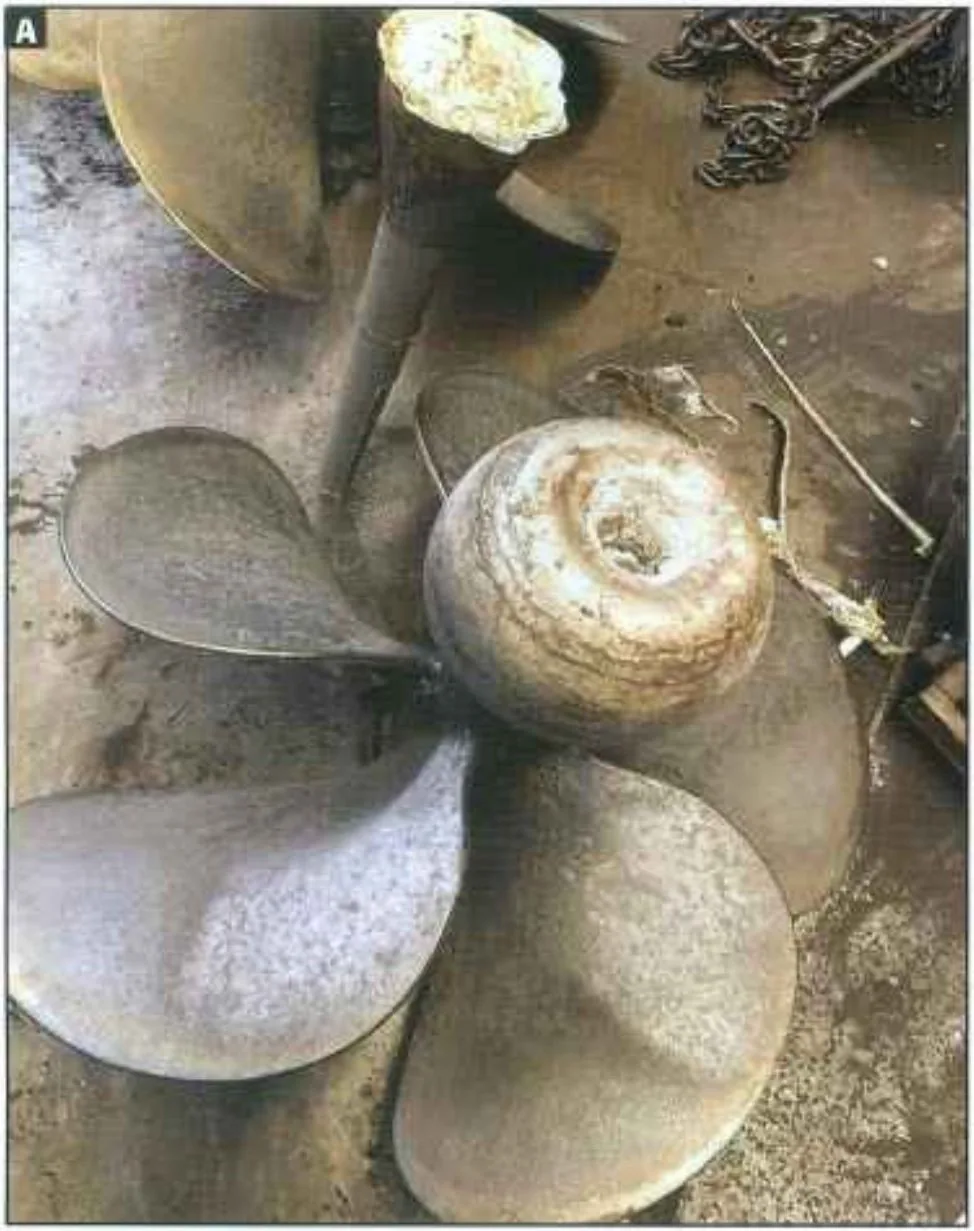
Worn original 1,000 mm propeller alongside the re-designed cast replacement before machining
Original worn 1,000 mm propeller and the re-designed cast replacement before machining.

Reported Production Lead Times

  • 800 mm diameterabout 21 days
  • 1,000 mm diameterabout 21 days
  • 1,200 mm diameterabout 44 days

Times are those reported in the 2019 publication for the specific propellers described, covering casting design, moulding design, sand mould printing, casting and machining. They are not a general lead-time commitment.

C95800 Tensile Results Reported

PropertyTest bars 1 / 2 / 3MeanASTM B148 minimum
Yield strength (MPa)280 / 292 / 266279240
UTS (MPa)610 / 622 / 615616585
Elongation (%)18.4 / 20.4 / 19.919.615

Repeat tensile results on bars cast into 3D sand printed moulds from the melt used to pour the 1,200 mm propeller. Values relate to that melt only and are not a specification for other work. See the material guide for alloy information.

Key Engineering Takeaways

  • Printed moulds allowed spherical feeders to replace cylindrical feeding heads, improving feeding efficiency and reducing mould height.
  • Conventional pattern production of a propeller was reported to take around 2–3 months; the 3D sand printed route reduced this to about 21 days for the 800 mm and 1,000 mm designs.
  • A complete 1,200 mm propeller mould was printed as 26 separate parts in 7 days of printing time.
  • C95800 tensile results on bars cast into printed moulds met the minimum ASTM B148 requirements for yield strength, UTS and elongation.
  • Damaged propellers can be replaced and re-designed using CFD within a short lead time, without patterns or core boxes.
  • Furan-bonded printed moulds were stored and transported at ambient temperature without a significant fall in strength.

Publication Reference

Valun-araya, N., Chantarasukkasem, O. and Pearce, J. "Production of Aluminium Bronze Propellers Using 3D Sand Printed Moulds." Metal Casting Technologies, 2nd Quarter, 2019, pp. 18–23.

Industry Technical Publication · 2019

This page is a technical summary of the published article. Figures are reproduced from Metal Casting Technologies (2019). Publication does not imply endorsement or certification of Speed 3D Mold.

Thai-Language Technical Articles

Related Coverage in Thai

Two Thai-language technical articles published by Naichangmashare on 18 May 2025 discuss 3D sand printing for marine propeller production, including the nickel aluminium bronze propeller work described in this publication.

Published by Naichangmashare. These pages credit Speed 3D Mold and display company contact details; the publishing relationship has not been independently verified. They are not peer-reviewed research or endorsements.

Discuss a Marine or Pump Component

Send an existing drawing, CAD file, scan data, or photographs of the worn component and our engineering team can review a patternless production route.

Technology Representation

ExOne logo

ExOne Sales Representative in Thailand

Speed 3D Mold Co., Ltd. is listed by ExOne as a sales representative in Thailand, supporting local coordination for industrial sand 3D-printing solutions.

Verify our listing on ExOne’s official global support network.

View Official ExOne Listing

MEMBERS & SOCIETIES

Thai Foundry Association
FTI