Production Casting for One-Off and Repeat Requirements
From digitally prepared molds to finished cast components, Speed 3D Mold coordinates with Chaophaya Foundry to support one-off, prototype, replacement, and repeat casting requirements.
Engineering Summary
Production Casting supports repeat manufacturing once component geometry, material, casting design, and inspection requirements are sufficiently defined. The appropriate manufacturing route is not fixed in advance: it depends on quantity, geometry, tooling economics, quality requirements, and how stable the design is expected to remain.
A completed prototype does not automatically mean a component is production-ready. Engineering review is carried out before production release to confirm that the available technical information, the selected casting method, and the agreed inspection scope are consistent with the intended repeat requirement.
Is Your Project Ready for Repeat Production?
These questions are used during an initial engineering review. Any answer that is still open usually indicates work to complete before a production route is fixed.
- Is the component geometry approved and sufficiently stable?
- Are material and service requirements confirmed?
- Are critical dimensions, tolerances, and machining allowances defined?
- Has the casting and feeding approach been reviewed?
- Are inspection and acceptance requirements agreed?
- Is the expected production quantity known?
Decision Guide: Which Route to Evaluate
No single casting route suits every project. The table below shows how common project situations are usually directed during engineering review.
| Project situation | Route to evaluate | Engineering reason |
|---|---|---|
| Design is still changing | Prototype Casting | Additional validation may be needed before repeat production. |
| Stable, approved geometry | Production Casting | Suitable for repeat manufacturing review. |
| Obsolete existing component | Replacement Casting | Existing-part reproduction follows a different engineering route. |
| Low quantity or complex cores | Patternless production route may be evaluated | Tooling economics and geometry should be reviewed. |
| Stable higher repeat quantity | Conventional or hybrid tooling route may be evaluated | Long-term production economics may favour reusable tooling. |
Casting Capabilities for Different Component Requirements
Sand Casting
Flexible casting production for complex geometries, larger components, and low-to-medium quantity requirements.
Shell Mold Casting
A production option for components requiring controlled mold geometry and consistent surface definition.
Centrifugal Casting
A specialized casting process for cylindrical components such as bushings, sleeves, and bearings.
Patternless Casting
3D sand-printed molds allow selected components to proceed without conventional wooden or metal pattern production.
Learn more about Patternless Casting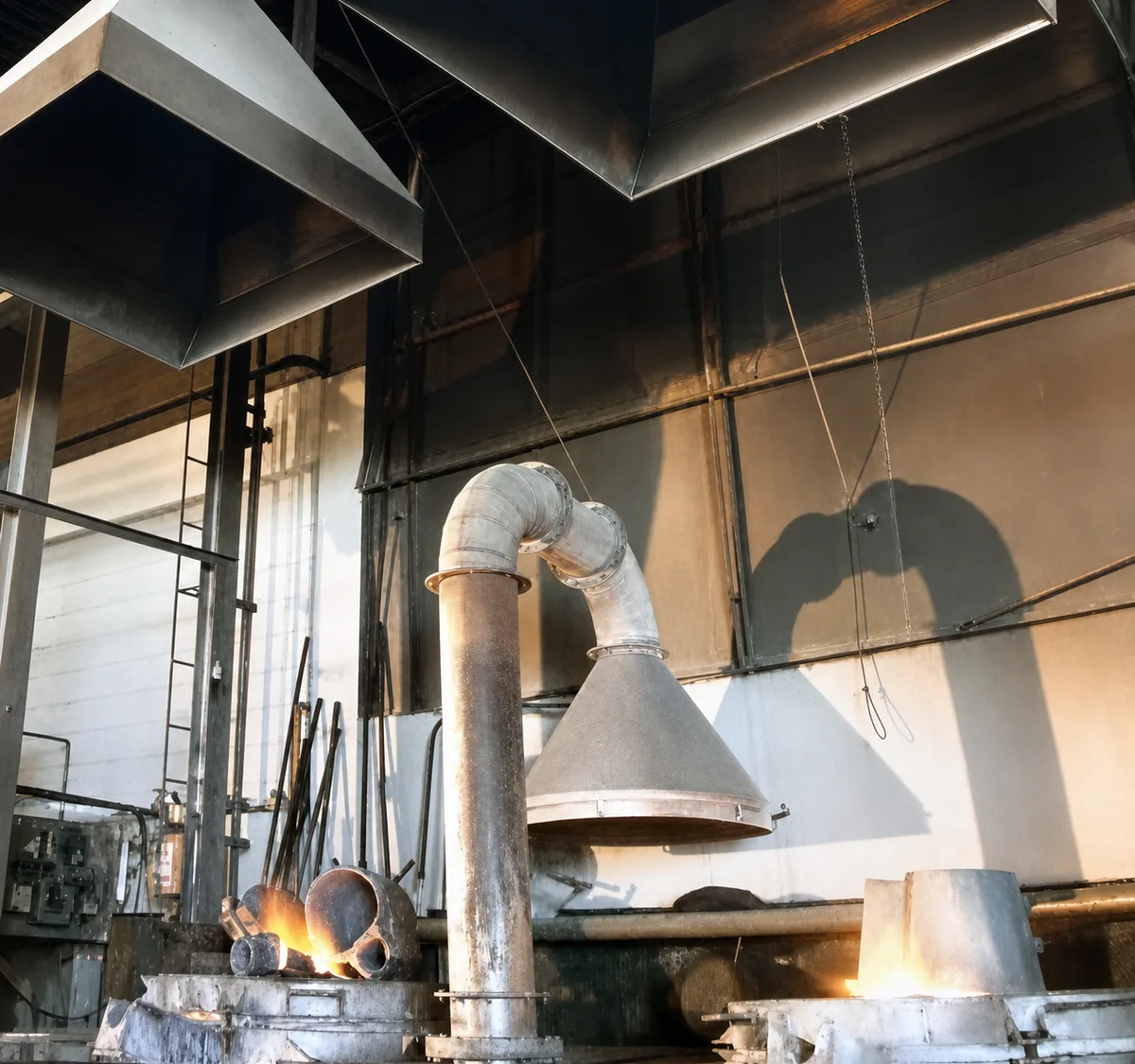
Foundry Operations for Ferrous and Non-Ferrous Castings
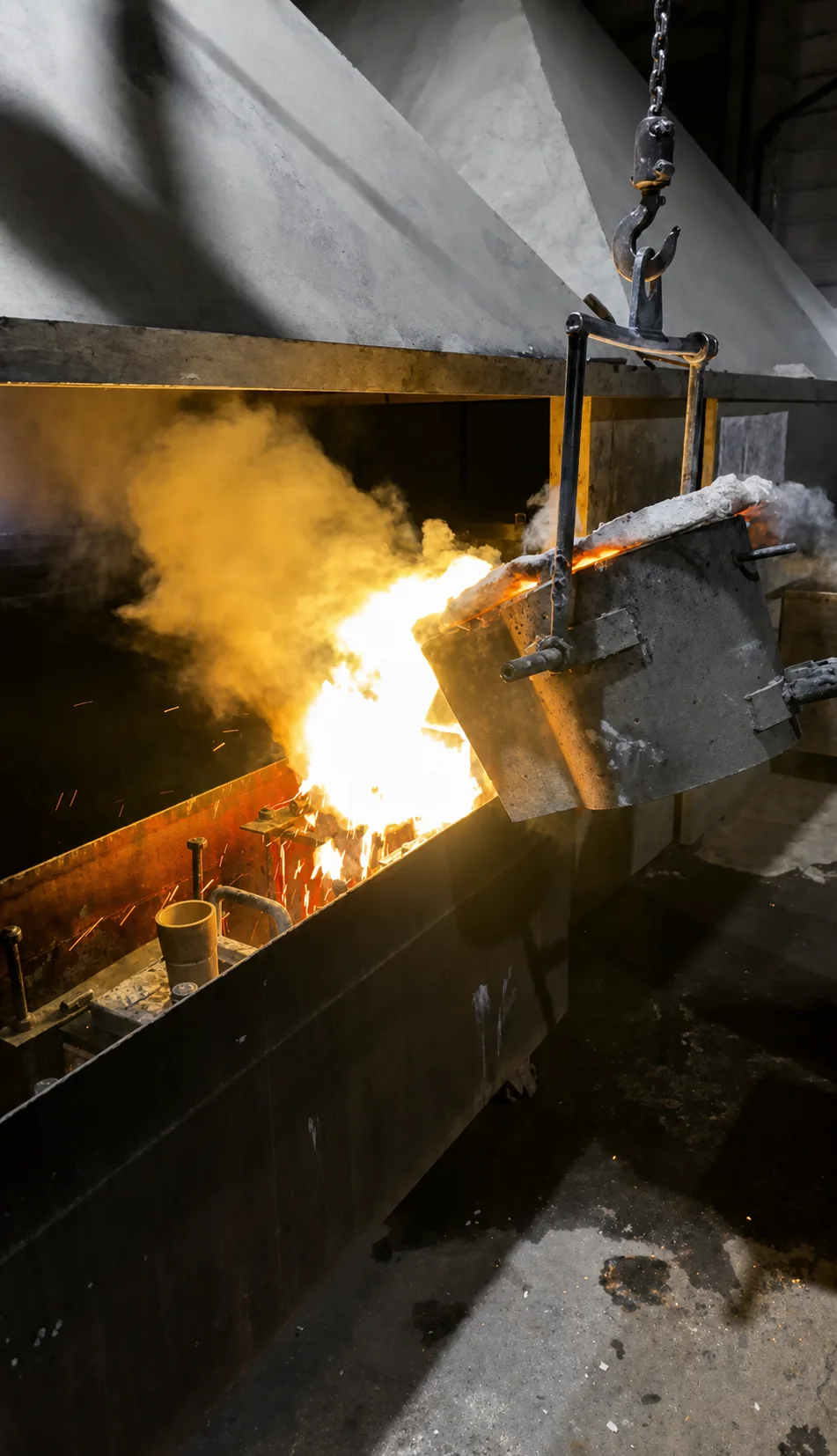
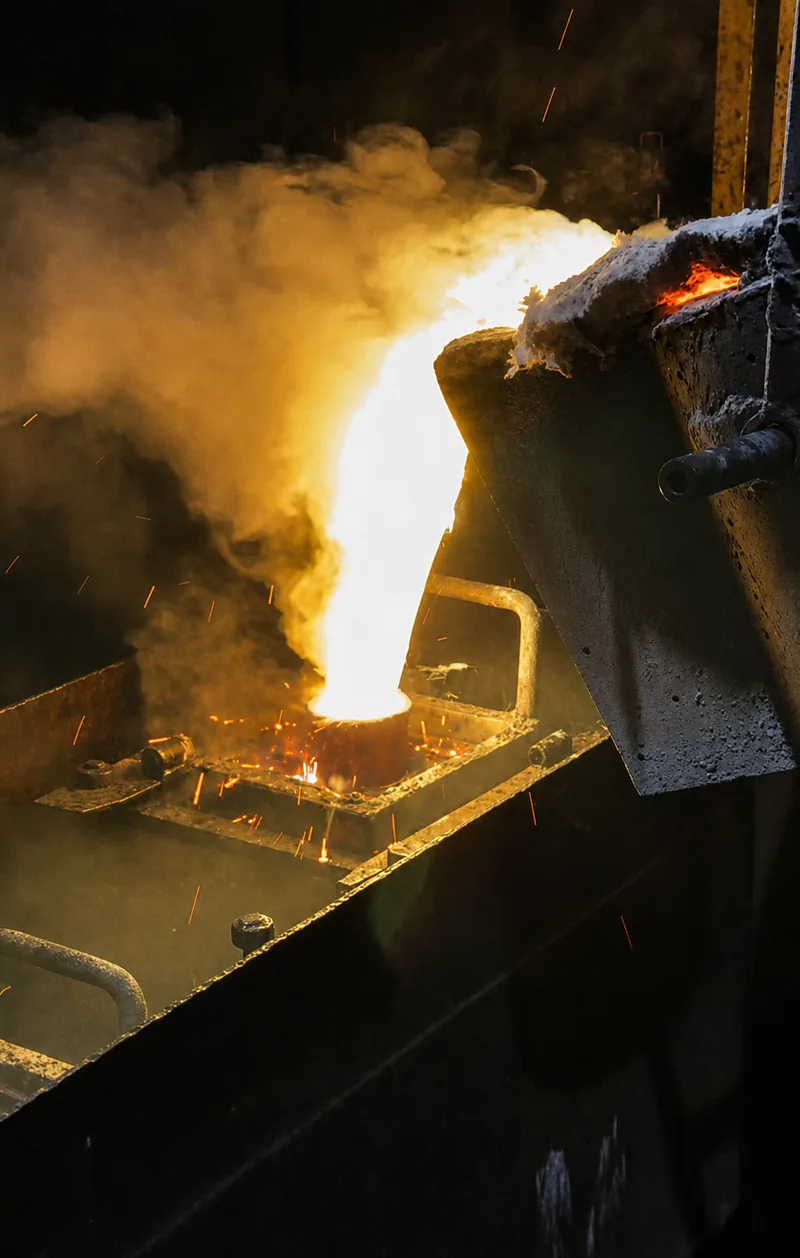
Casting operations are carried out in coordination with Chaophaya Foundry, an associated company with foundry production capabilities. The production route is selected according to the component and agreed technical requirements.
- Mold and core preparation
- Melting and metal preparation
- Pouring and process control
- Finishing and inspection
Production Engineering Workflow
Each stage has a defined input, an engineering activity, and an output that the next stage depends on. Not every project uses every stage in the same depth.
Approved Engineering Input
Review the drawing, CAD data, physical sample, quantity, material requirement, and requested inspection scope.
- Input:
- Drawing, CAD data, or sample
- Output:
- Confirmed engineering baseline
Manufacturability and Casting Review
Prepare component geometry, casting allowances, mold information, and production-related engineering data.
- Input:
- Engineering baseline
- Output:
- Reviewed casting geometry
Material and Process Confirmation
Confirm the alloy family and process route. Casting simulation may be used when appropriate to component complexity, process risk, and agreed project scope.
- Input:
- Material and service requirements
- Output:
- Agreed material and process route
Mold, Core, Gating and Risering
Select and prepare the mold, core, gating, and risering route according to component geometry and production requirements.
- Input:
- Approved casting design
- Output:
- Prepared mold and core package
First Production or Qualification Casting
Prepare the metal and pouring procedure according to the selected alloy, mold system, component geometry, and production plan.
- Input:
- Mold package and melt plan
- Output:
- First cast component
Inspection and Acceptance Review
Complete agreed finishing, cleaning, dimensional checks, inspection, and documentation activities.
- Input:
- First cast component
- Output:
- Inspection results against agreed scope
Repeat Production Release
Where the acceptance review is satisfied, the prepared manufacturing information is retained so later batches follow the same reviewed route.
- Input:
- Accepted first casting
- Output:
- Released repeat production route
Prototype Casting Compared with Production Casting
An as-cast prototype demonstrates that a design can be cast. It is not automatically a production-ready component. The two stages have different objectives and different inspection intent. See Prototype Casting for the development stage in detail.
| Aspect | Prototype Casting | Production Casting |
|---|---|---|
| Primary objective | Confirm that a new design can be cast | Manufacture the approved design repeatably |
| Design maturity | Developing and open to revision | Approved and expected to remain stable |
| Expected changes | Geometry, rigging, or material may change | Changes are handled as a controlled revision |
| Manufacturing route | Selected for speed of iteration | Selected for quantity, geometry, and production economics |
| Inspection purpose | Learning and feasibility feedback | Acceptance against agreed requirements |
| Next decision | Revise the design or move toward production | Release, or return to engineering review |
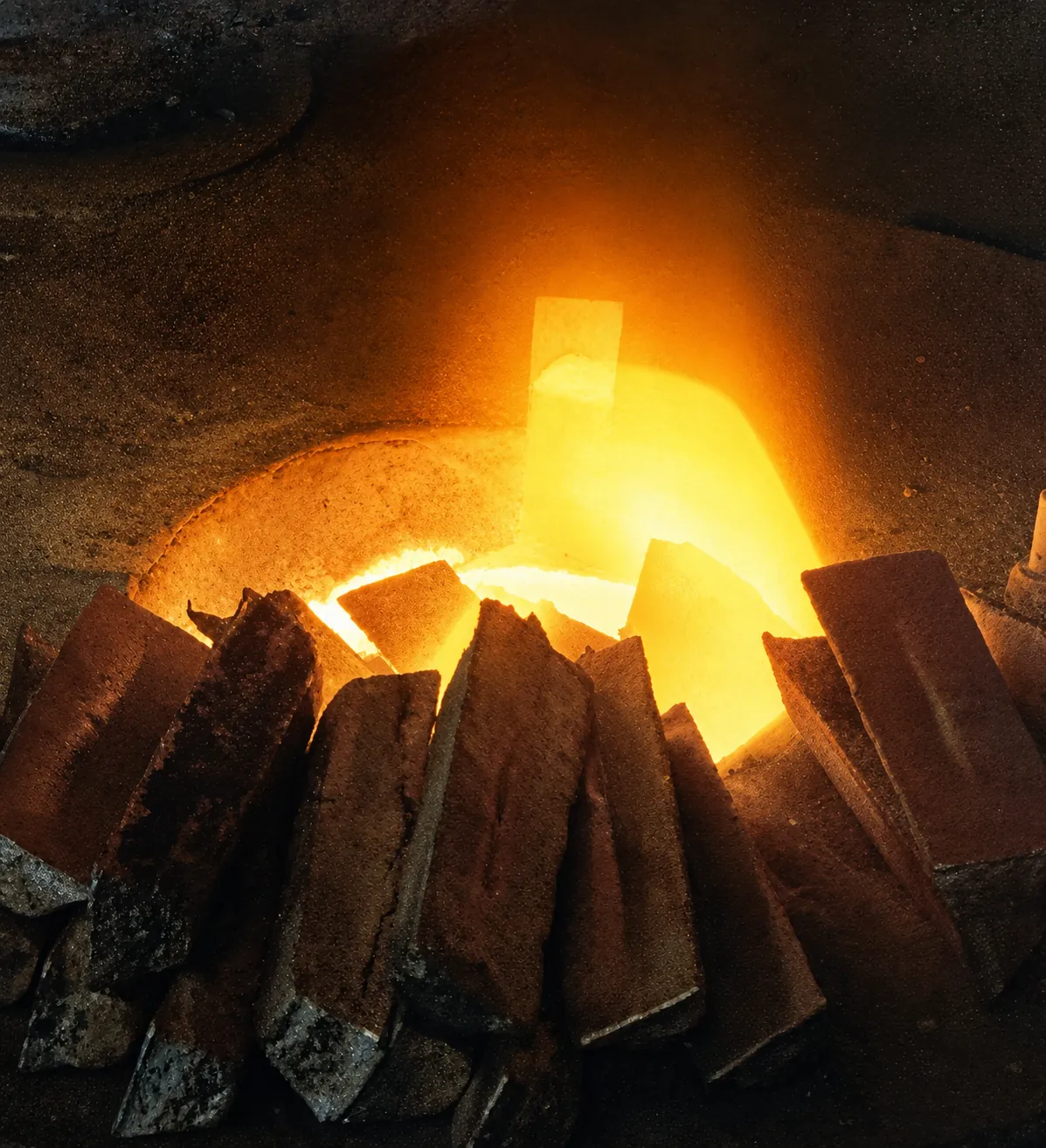
Material Preparation for the Selected Casting Route
Material selection and melting preparation are reviewed against the specified casting requirement. Available verification and documentation are defined according to the applicable production plan and agreed project scope.
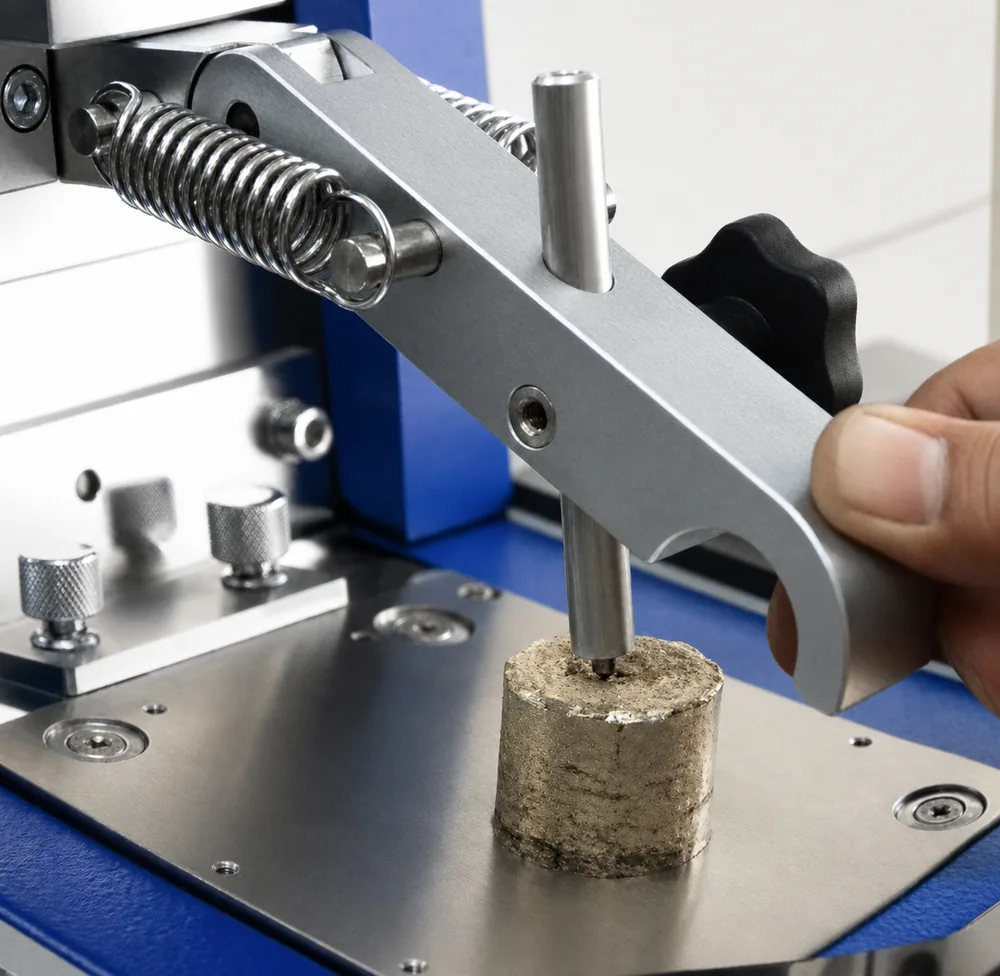
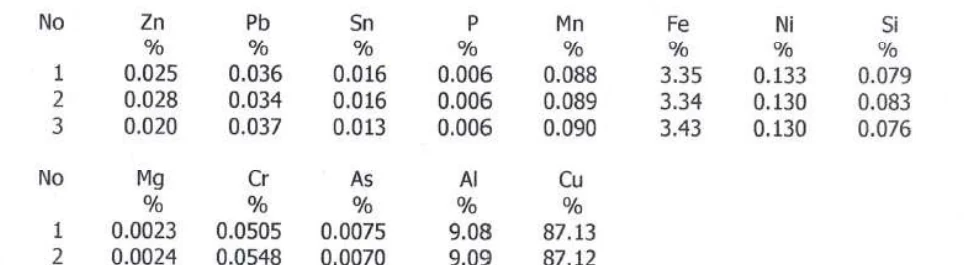
Chemical Composition Verification by Spectrometer
Spectrometer analysis is used to verify the chemical composition of the metal against the specified material requirements. The analysis forms part of the material control and inspection process for applicable casting projects.
Chemical composition analysis is performed according to the applicable production and inspection plan.
- Chemical composition analysis
- Material grade verification
- Melt or heat identification
- Results documented according to the agreed inspection scope
Inspection Defined by the Casting Requirement
Inspection and documentation are planned according to the component, material specification, application, and agreed customer requirements. Not every project uses every method below. Dimensional review may be supported by CAD verification, material questions by Materials, and process risk by Casting Simulation.
Production Routes for Different Requirements
One-Off Casting
Casting production for individual components, trials, or limited-quantity requirements.
Replacement Production
Reproduction of an existing component using available drawings, CAD data, scan data, or a physical sample.
Repeat Production
Repeat casting requirements using previously prepared and controlled manufacturing information.
Production Casting does not rely on a single universal mold-production route. The selection depends on quantity, geometry, design stability, core complexity, tooling availability, project lifecycle, schedule, and production economics. Depending on those conditions the route may use patternless technology, 3D sand printing, or a conventional molding process.
Ferrous and Non-Ferrous Casting Materials
Material selection is reviewed against the component application, manufacturing route, and customer specification.
Non-Ferrous Alloys
- •Aluminum Bronze
- •Nickel Aluminum Bronze
- •Copper-Based Alloys
- •Other alloys subject to technical review
Ferrous Alloys
- •Cast Iron
- •Carbon and Alloy Steel
- •Stainless Steel
- •Other grades subject to technical review
Casting Experience Across Industrial Components
Digital Preparation Connected with Foundry Operations
Speed 3D Mold provides digital geometry preparation and 3D sand-printed mold capabilities. Casting operations are carried out in coordination with Chaophaya Foundry, an associated company supporting ferrous and non-ferrous casting production.
Information for a Production Review
Providing the available technical information helps the team review a suitable production route and identify any additional information required.
- Approved CAD or engineering drawings
- Material requirement and service conditions
- Expected quantity and any batch requirement
- Critical dimensions, tolerances, and machining requirements
- Inspection and documentation requirements
- Existing component or scan data, if applicable
Related Research
3D Sand Printing for Part Replacement
Shows how digitally prepared molds are applied when tooling is unavailable, which affects the production route decision.
Spherical-Shaped Feeders in 3D Sand Printed Moulds
Feeding design work of this type informs the risering preparation carried out before a production casting.
Helical Sprues in 3D Sand Printed Moulds
Gating studies of this kind support the filling decisions made when a casting method is prepared for repeat manufacture.
Related Engineering Services
- Prototype CastingUsed when a new design still needs casting feasibility confirmation before production review.
- Replacement CastingApplies when an existing or obsolete component is reproduced rather than newly developed.
- Casting SimulationSupports filling and feeding decisions where component complexity or process risk justifies it.
- MaterialsDescribes the ferrous and non-ferrous families considered during material confirmation.
- CAD VerificationSupports dimensional review of geometry before it is released for repeat production.
Key Takeaways
- Repeat production depends on stable engineering inputs: approved geometry, confirmed material, defined tolerances, and an agreed inspection scope.
- There is no single universal production route. Quantity, geometry, core complexity, tooling availability, and schedule all influence the selection.
- Completing a prototype casting does not automatically mean the component is production-ready.
- Inspection and acceptance requirements should be agreed before the first production batch is released.
- Engineering review, not the previous stage alone, determines the appropriate next production step.
Production Casting Questions
Request a Production Engineering Review
Submit your approved drawings, production requirements, material specification, expected quantity, and inspection requirements for an engineering production review. Our team will evaluate the available information and recommend an appropriate manufacturing approach.
Not ready for production yet? Review Prototype Casting →